
Have you ever finished scrolling on your phone late at night and then felt like your brain just wouldn’t shut off? That weird, restless feeling when all you want is to wind down and actually sleep? A lot of people notice this pattern—and it often comes down to the blue light pouring out of screens and bright LEDs after the sun goes down.
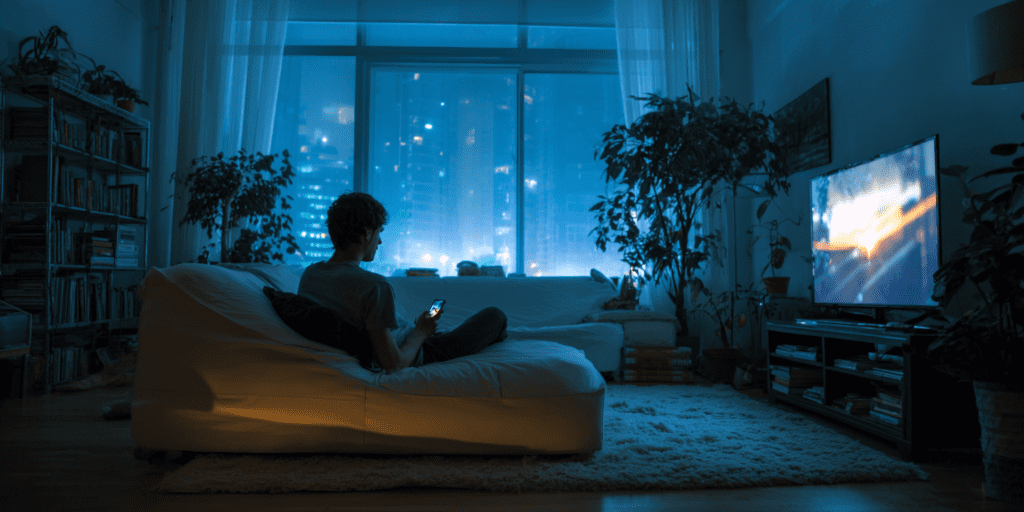
This isn’t about telling you screens are evil or that you need to live in a cave. It’s just about noticing what many people experience and sharing a few simple things you can try if you want to feel calmer and more rested in the evening. These are low-effort habits drawn from real-world patterns and common-sense ancestral living ideas.
Why Evening Light Feels Different
During the day, bright light (especially blue light) helps us feel awake and alert. That’s useful. But when the sun sets, our bodies naturally start shifting toward rest mode. Modern screens and indoor lights keep sending “stay awake” signals long after dark, and many people feel the difference—wired when they want to relax, finding it harder to fall asleep, and feeling more tired the next day even after “enough” hours in bed.
Observational patterns and lab studies have shown that evening blue light can delay the natural wind-down process. The point isn’t to fear light—it’s to recognize that the timing and type of light matter to how we feel.
Easy Steps to Cut Evening Blue Light
These aren’t complicated rules. They’re small shifts that fit into real life and that many people find make evenings feel noticeably calmer.
1. Stop Bright Screens Earlier
One of the simplest changes: move phone, tablet, or laptop time earlier in the evening. Many people feel a big difference when they stop using bright screens 1–2 hours before bed.
- Do your scrolling, texting, or shows before dinner or early evening.
- Give your brain a chance to ease into rest mode naturally.
2. Turn On Night Mode / Warm Filters
Almost every device has a built-in way to warm up the screen at night.
- iPhone/iPad: Night Shift
- Android: Night Light or Bedtime mode
- Mac: Night Shift
- Windows: Night light
- Turn it on at sunset and set it to the warmest setting.
3. Try Orange or Amber Glasses
Some people wear orange-tinted glasses after sunset. They’re inexpensive, and many report feeling calmer when the remaining lights don’t hit as hard.

- Look for ones that block blue light (400–500 nm range).
- Affordable options are available (affiliate disclosure: we use Amazon links).
4. Swap to Warmer Home Lighting
Most indoor bulbs blast blue light in the evening. Switching makes a noticeable difference for a lot of people.
- Use warm bulbs (2700K or lower) in lamps after sunset.
- Try red bulbs or candles for the last hour or two before bed—many say it feels more natural.
- Dim everything in the evening.

5. Build a Low-Screen Wind-Down
Replace late-night screen time with things that feel grounding.
- Read a real book
- Journal or write down tomorrow’s to-do list
- Light stretching or just sitting quietly
- Talk with someone face-to-face
These small shifts often make evenings feel more peaceful—and mornings feel more rested.
Quick Everyday Comparison
| Habit | Blue Light Level | Easy Swap |
|---|---|---|
| Phone in bed | High | Stop 1–2 hrs before sleep |
| Laptop late at night | High | Night mode + warm lamp |
| Warm bulb bedside | Low | Keep it |
| Red light or candle | Very low | Use for wind-down |
| No screens after sunset | Minimal | Ideal long-term rhythm |
Final Thoughts
Cutting back on evening blue light is one of those low-effort experiments that many people find worth trying. The changes are simple, you can stop anytime, and a lot of people notice evenings feel calmer and mornings feel better.
What have you tried? Drop your experiences in the comments—we love hearing real-world patterns.
FAQ
How long before bed should I stop bright screens?
Many people try 1–2 hours. Earlier often feels better.
Do blue light glasses actually help?
Many report feeling calmer. Small studies and real-world use suggest they can reduce the impact of leftover light.
Is this the same as turning off all lights?
No — soft natural evening light (fire, candles) is very different from bright artificial blue light.
Sources & References
- Chang, A.-M., et al. (2015). Evening use of light-emitting eReaders negatively affects sleep. Proceedings of the National Academy of Sciences.
- Figueiro, M. G., et al. (2011). Light exposure at night and melatonin suppression. Journal of Applied Physiology.
- Harvard Health Publishing – Blue light has a dark side (review article).
- General observational patterns from sleep research literature (PubMed, 2010–2025).
(Always refer to primary sources and experiment for yourself. No medical advice provided.)
Leave a Reply