
Buy a steak from the grocery store. It is bright red, marbled, and uniform. Now buy one from a grass-fed ranch. It is darker and leaner, with a different fat pattern. Cook both. The grass-fed one tastes cleaner, more mineral-rich, and less sweet. Many people notice this immediately. We believe the difference is not small. Grain-fed beef is the modern industrial version. Grass-fed is what our ancestors actually ate. The nutrient profile, flavor, and fatty-acid balance tell the story clearly.
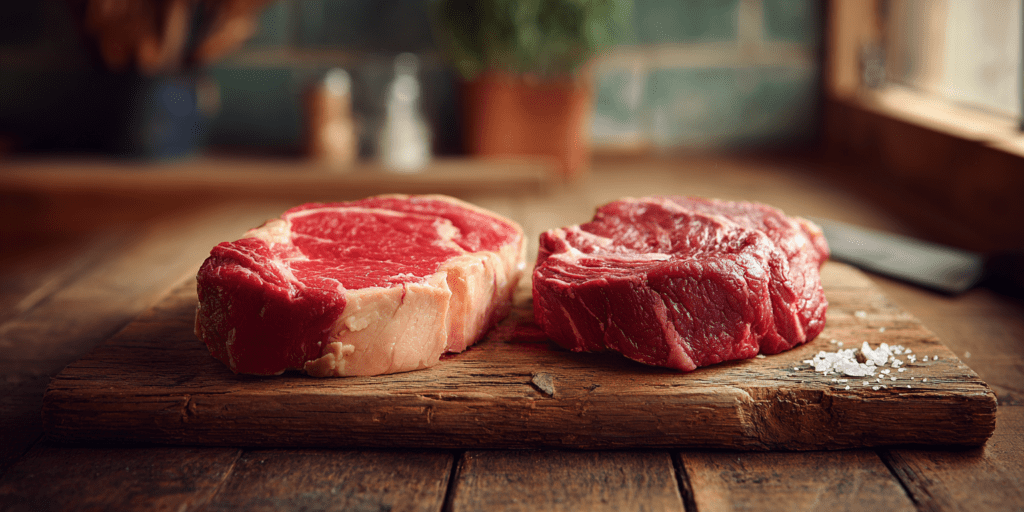
This post is not about saying all grain-fed beef is bad. It is about showing the real differences in how the animals are raised and what ends up on your plate. Our ancestors ate grass-fed ruminants because that is what nature provided. Grain-fed is a 20th-century shortcut. We believe the data on nutrients, omega ratios, and taste makes the case obvious. The choice is bigger than most people realize.
How Our Ancestors Ate Meat—And Why It Was Always Grass-Fed
Before feedlots, every cow, sheep, goat, and bison ate grass. That is what ruminants are designed to digest. Our ancestors hunted or herded animals that lived on pasture. No corn silos. No grain trucks. Meat was seasonal, nutrient-dense, and tied to the land. The fat was yellow-orange from beta-carotene in grass. The meat had a deep, mineral flavor.
Archaeological sites show this everywhere. Bison bones from 12,000 years ago in North America have isotopic signatures of grass-fed animals (Science 2018). We believe grass-fed is the default state for ruminants. Grain-fed is the exception humans created. When many people taste grass-fed beef for the first time, they notice it feels more satisfying and less heavy. We believe that is because it is closer to what the body expects.
The Nutrient Differences: Grass-Fed Wins on Key Markers
Grain-fed cattle are finished on corn and soy in feedlots. This fattens them quickly and gives bright red meat with white fat. Grass-fed cattle grow slower on pasture. The meat is darker, the fat is yellower, and the nutrient profile shifts significantly.
A 2010 study in Nutrition Journal compared grass-fed vs grain-fed beef. Grass-fed had 2–5× higher omega-3 fatty acids, 3× higher CLA (conjugated linoleic acid), higher vitamin E, and higher beta-carotene. The omega-6 to omega-3 ratio in grass-fed beef is closer to 2:1. Grain-fed is often 10:1 or higher. We believe this ratio matters. Ancestral diets were closer to 1:1–4:1. Modern diets are 15:1–20:1. Grass-fed helps bring it back.
CLA is another big difference. Grass-fed beef has up to 500% more CLA than grain-fed (Daley 2010). CLA is naturally occurring in ruminant fat. We believe it is one reason grass-fed feels cleaner to eat. Grain-fed is fattier but with a different fat profile.
The Flavor Difference: Why Grass-Fed Tastes More Like Real Beef
Grain-fed beef is bred for marbling and mild flavor. It is consistent and mild. Grass-fed has a deeper, mineral-rich taste with grassy notes. Many people who switch notice grass-fed feels more satisfying and less heavy. A 2015 study in Meat Science found grass-fed beef had higher levels of volatile compounds that give beef its characteristic flavor. Grain-fed had more neutral profiles.
We believe the flavor difference is not just preference. It is a signal of nutrient density. Grass-fed tastes like the animal lived its natural life. Grain-fed tastes like it was finished in a feedlot. The taste is the body recognizing the difference.
Why Grain-Fed Became the Default
Grain-fed is cheaper and faster. Feedlots finish cattle in 120–150 days. Grass-fed takes 18–24 months. Grain-fed gives more marbling and uniform meat. It is easier to sell to supermarkets. We believe this is economics, not nutrition. Grain-fed is optimized for profit, not nutrient density or flavor.
Feedlot cattle are given antibiotics and hormones to grow fast. Grass-fed is usually raised without them. We believe the system is designed to produce quantity, not quality. The nutrient and flavor differences show the cost of that choice.
Simple Ways to Switch to Grass-Fed
No need to go 100% overnight. These are practical steps many people take.
- Start with ground beef (50/50 grass-fed blend hides the price difference)
- Buy steaks or roasts from local grass-fed farms
- Use ButcherBox or US Wellness Meats for delivery
- Look for “grass-fed” and “grass-finished” labels (grain-finished is common)
- Render tallow from grass-fed suet for cooking
Quick Comparison: Grass-Fed vs Grain-Fed Beef
| Factor | Grass-Fed | Grain-Fed | What Many Notice |
|---|---|---|---|
| Omega-3 | 2–5× higher | Low | Healthier fat profile |
| CLA | Up to 500% higher | Low | More nutrient-dense |
| Vitamin E & Beta-Carotene | Higher | Lower | Darker, yellower fat |
| Flavor | Rich, mineral, grassy | Mild, sweet | Tastes more like beef |
| Finish Time | 18–24 months | 120–150 days | Leaner, less marbled |
What We Think
We believe grass-fed beef is clearly superior in nutrient profile, flavor, and alignment with ancestral eating. Grain-fed is cheaper and faster, but it sacrifices the nutrients and taste our ancestors got naturally. The omega-3, CLA, and vitamin differences are significant. We believe choosing grass-fed is one of the smartest things anyone can do when eating meat. It tastes better. It feels cleaner. The data backs it up.
What have you noticed with grass-fed vs. grain-fed? Share in the comments. We are interested in real patterns.
Related Reading:
FAQ
Is grass-fed beef always better?
In nutrient profile and flavor, yes. It is leaner and has a better fatty-acid balance. Grain-fed is cheaper and more marbled.
How do I know it is truly grass-fed?
Look for “grass-fed and grass-finished. “Many labels say “grass-fed” but finish on grain. Source from trusted farms.
Is grass-fed beef more expensive?
Yes. It takes longer to raise. Many people find the taste and nutrient density worth it.
Sources & References
- Daley, C. A., et al. (2010). A review of fatty acid profiles and antioxidant content in grass-fed and grain-fed beef. Nutrition Journal. Link
- Turner, K. E., et al. (2015). Meat quality and fatty acid composition of beef from grass-fed and grain-fed cattle. Meat Science. Link
- Descalzo, A. M., et al. (2005). Influence of pasture or grain-based diets on antioxidant/oxidative balance of Argentine beef. Meat Science. Link
- General patterns from grass-fed vs grain-fed beef nutrient research literature (PubMed, 2010–2025).
(Always refer to primary sources and experiment for yourself. No medical advice provided.)
Leave a Reply