
If you train hard, work long hours, and still feel tired, flat, or wired at night, this usually isn’t a discipline issue.
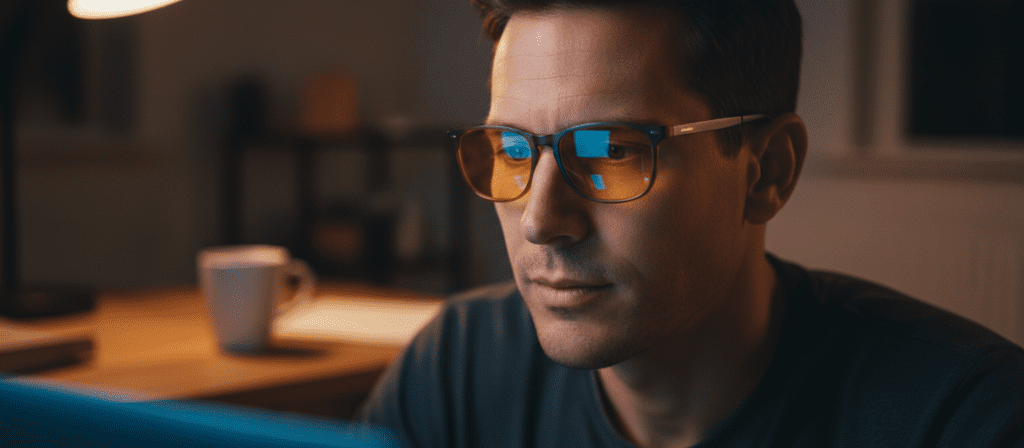
It’s a timing issue.
Your brain uses light to decide what time it is. Modern life exposes your eyes to bright, blue-heavy light long after sunset, which tells your body it’s still daytime.
This disconnect explains why it’s possible to feel exhausted but struggle to fall asleep, why a full night of sleep can still feel unrefreshing, and why recovery and focus slowly decline even when diet and training are dialed in.
Blue light blocking glasses are not a cure-all. When used correctly, they remove one of the main signals that keeps the body stuck in “day mode” at night.
Why Falling Asleep Feels Hard Even When You’re Tired
Late at night, bright screens and LED lighting continue to stimulate light-sensitive receptors in the eyes that communicate directly with the brain’s internal clock.
When that clock receives strong light signals, it delays the release of melatonin and keeps the nervous system alert.
The result is a familiar pattern: low energy during the day, followed by mental alertness at night when the body should be winding down.
Reducing blue-heavy light after sunset helps remove that conflicting signal and allows the normal nighttime sequence to begin.
Why Sleeping Enough Hours Doesn’t Always Feel Restorative
Sleep duration and sleep quality are not the same thing.
When light exposure is mistimed, sleep may occur later and with less depth, even if total hours look adequate on paper.
This often shows up as morning grogginess, slower reaction time, and a reliance on caffeine to feel functional.
Strengthening the contrast between bright days and dark nights improves the body’s sense of time, which supports more restorative sleep.
Why Recovery and Consistency Decline Over Time
As demands increase, recovery margins shrink.
Late-night light exposure interferes with the signals that normally support nighttime repair and recovery. Over time, this can feel like slower bounce-back from training, lingering soreness, and less consistent energy.
Removing artificial light cues in the evening helps protect the natural wind-down period the body relies on to recover.
Why Screens at Night Are Hard to Avoid
Evenings often involve work, communication, or unwinding in front of a screen.
Completely avoiding screens isn’t realistic for most people. The issue isn’t screen use itself, but the light signal they deliver at the wrong time.
Filtering that light allows normal routines to continue while reducing the impact on sleep timing.
How Blue Light Affects the Body (Plain Explanation)
Your eyes contain specialized receptors that send light information to the brain’s central clock. Blue-enriched light has a strong effect on these receptors.
During the day, this is helpful. It supports alertness and focus.
At night, the same signal delays the body’s shift into its nighttime state.
This is why timing matters more than light itself.
The Types of Blue Light Glasses That Matter at Night
Many clear “screen glasses” are designed for daytime eye comfort and block only small amounts of blue light.
For nighttime use, lens color and coverage matter more.
Amber Lens Glasses
- Reduce a large portion of blue light
- Easy to wear during evening activities
- Well suited for TV, work, and general nighttime use

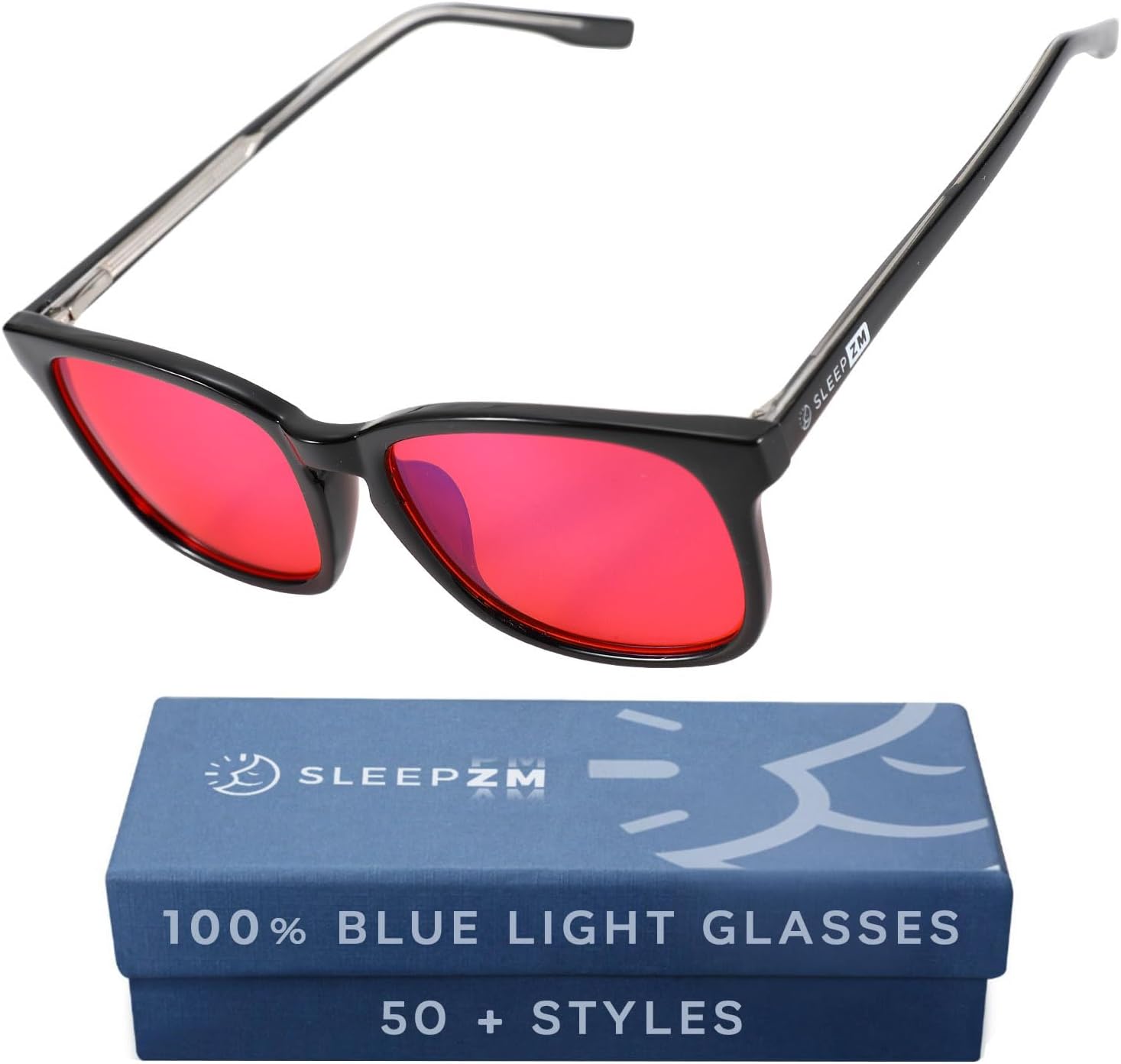
Red Lens Glasses
- Block most blue and green wavelengths
- Create a stronger nighttime signal
- Often used during the last hour or two before bed
How to Use Blue Light Glasses Effectively
Consistency matters more than perfection.
- Put them on after sunset or a few hours before bed
- Wear them nightly for at least a week before evaluating changes
- Reduce harsh overhead lighting when possible
- Balance nighttime darkness with brighter light exposure earlier in the day
A simple approach is often enough: darker evenings, brighter mornings.
What to Look for When Choosing Glasses
- Amber or red lenses rather than clear
- Wide or wraparound frames to reduce side light
- Comfort for extended wear
- Clear indication they’re intended for nighttime or sleep use
If lenses appear nearly clear, their effect on nighttime signaling is usually limited.
Recommended Amazon Options
- Amber Lens Night Glasses: View on Amazon
- Red Lens Night Glasses: View on Amazon
Frequently Asked Questions
Do blue light blocking glasses actually make a difference?
They can be helpful when worn consistently at night, especially in environments with screens and bright LED lighting. Lens color and timing influence how noticeable the effect is.
Are clear blue light glasses useful at night?
Clear lenses may reduce eye strain for some people but usually do not block enough blue light to meaningfully affect nighttime timing.
When is the best time to wear them?
After sunset or two to three hours before bed. Many people find it easiest to put them on after dinner.
Does room lighting still matter?
Yes. Glasses help reduce the signal, but very bright overhead lighting can still interfere with nighttime wind-down.
Do these affect hormones?
These glasses are not a hormone product. They help reduce a light signal that interferes with sleep timing and nighttime recovery.
Sources
- National Library of Medicine (PubMed): circadian rhythm, melatonin, and light exposure research
- Harvard Health Publishing: blue light and sleep timing
- American Academy of Sleep Medicine: guidance on circadian alignment and light exposure
The Bottom Line
Sleep quality shapes recovery, focus, and consistency.
Bright, blue-heavy light at night pushes the internal clock later and disrupts the body’s natural wind-down process.
Blue light blocking glasses don’t force sleep. They remove a conflicting signal.
Bright days. Dark nights. Better alignment.
Leave a Reply