
(What We’re Actually Supposed to Drink—and What We’ve Screwed Up)
Everyone’s obsessed with clean eating, seed oils, and organ meats—great. But no one’s talking about water, and that’s a problem. Because if you’re eating perfectly and still feel off—foggy, crampy, tired, bloated—your water might be the real issue.
We’ve gone from drinking mineral-rich spring water flowing over rocks to sucking down dead, filtered tap water stored in plastic. That’s a hard downgrade, biologically speaking. Let’s get into it—what real hydration actually looks like, what you’re probably missing, and how to fix it without overcomplicating your life.
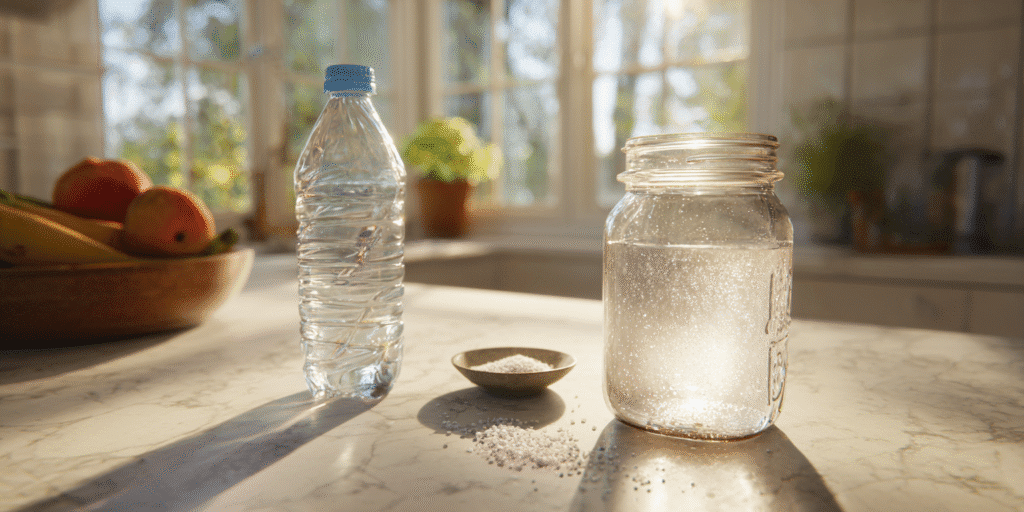
Not All Water Is the Same (Stop Thinking It Is)
Here’s the breakdown:
- Tap water = filtered chemical soup. You might get chlorine, fluoride, PFAS, pharma runoff, and maybe a side of microplastics. Just because it won’t kill you doesn’t mean it’s helping you.
- Purified water sounds clean, but it’s usually RO or distilled — meaning it’s been stripped of everything, including minerals your body actually needs.
- Spring water (the real kind, from underground aquifers) has minerals like magnesium, calcium, potassium—the stuff your nervous system, muscles, and brain run on.
- Distilled water is fine short-term, like for fasting or detox, but long-term? It’ll pull minerals from your body unless you remineralize it.
What Did Humans Actually Drink?
We weren’t designed to drink from a Brita. Ancestrally, humans drank from natural springs, rain catchments, or glacial melt—all of which were:
- Naturally filtered through rock
- Rich in trace minerals
- Structured and alive (yes, water has a structure—more on that in a sec)
- Stored in ceramic, wood, or stone—not plastic
Compare that to what’s in your average grocery store bottle. It’s filtered to death, sits in hot plastic, and is totally dead. You’re drinking water—but not hydrating.

Trace Minerals 40,000 Volts Drops is a concentrated liquid blend of trace minerals designed to be added to water. Trace minerals naturally contribute to fluid balance and electrolyte content, which can help support everyday hydration when mixed into beverages. The drop format allows for easy adjustment and use without added sugars, flavors, or fillers.
Why You Still Feel Dehydrated
If you’re drinking a ton of water and still feeling dry, bloated, or crampy—here’s why: you’re missing minerals. Water without minerals is like fuel without spark. Your body needs electrolytes to actually absorb and use it.
- Sodium: Balances fluids, keeps you sharp
- Potassium: Crucial for nerve and heart function
- Magnesium: The anti-stress mineral
- Calcium: For bone, nerve, and muscle function
If you’re drinking reverse osmosis or distilled water without adding minerals back in, you’re flushing your system without actually fueling it.
Structured Water, Grounding, and the Woo That’s Actually Real
Structured water—the kind found in natural springs—is said to be more bioavailable. Some call it EZ water (exclusion zone), and while the science is still catching up, the energy of water matters.
Walking barefoot on the earth (aka grounding) and sunlight both affect how water behaves inside your cells. It’s wild—but real. You’re not just drinking water for hydration—you’re feeding your cellular battery.
Glass vs. Plastic (Yes, It Matters)
If you’re still buying bottled water in plastic jugs and storing it on your kitchen counter under the sun… yikes. Heat + plastic = endocrine disruptors. Even BPA-free doesn’t mean safe.
Best options:
- Glass (top tier)
- Stainless steel
- Ceramic or clay (old school, still works)
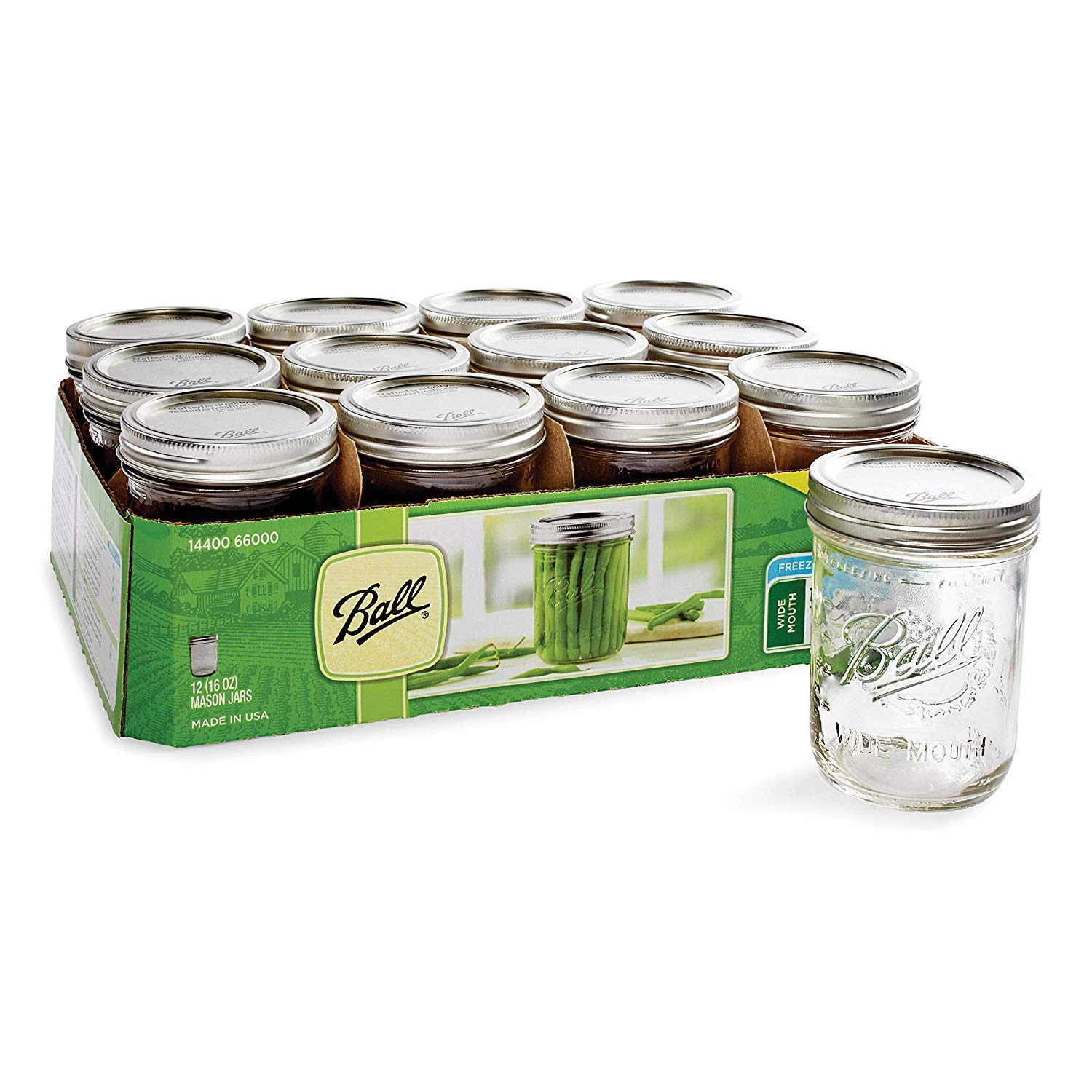
The Ball Wide Mouth Pint Mason Jars are 16-ounce glass jars made for food storage and canning. Each jar includes a two-piece metal lid and band, with a wide opening for easy filling and cleaning. This 12-count set works well for storing liquids, dry goods, or homemade foods.
Store your water like you store your food—somewhere cool, dark, and non-toxic.
Real Talk: What You Should Be Drinking
If you want to hydrate like a human, not a lab rat:
- Filter your tap water—use a gravity filter like Berkey or Clearly Filtered.
- Add minerals back—Celtic salt, Redmond’s, or Trace mineral drops.
- Store in glass—always.
- Drink early and often—start your day with minerals and water before food or coffee.
- Bonus points: Get real spring water if you can (findaspring.com). It’s the gold standard.
Final Thought
Hydration isn’t just about “drinking enough water.” It’s about drinking the right kind of water, the way humans have for thousands of years—mineral-rich, stored safely, not chemically processed, and not stripped bare.
If your energy, digestion, mood, or sleep is off, look at your water. This is foundational stuff.
Sources
Kozisek, F. Health Risks from Drinking Demineralized Water. World Health Organization, Drinking Water Quality Report (2005).
Wilbur, S., et al. Fluoride, Chlorine, and Drinking Water Chemicals. Agency for Toxic Substances and Disease Registry (ATSDR) (2021).
Xiao, F., et al. PFAS in Drinking Water and Human Health Implications. Environmental Science & Technology (2020).
Wang, Z., et al. Microplastics in Drinking Water: Occurrence and Human Exposure. Science of The Total Environment (2020).
Armstrong, L. Hydration, Electrolytes, and Human Performance. Journal of the American College of Nutrition (2007).
Costill, D., et al. Sodium and Water Absorption During Rehydration. Journal of Applied Physiology (1975).
Gropper, S., & Smith, J. Minerals in Human Nutrition. Advanced Nutrition and Human Metabolism (Cengage Learning, 2013).
Park, S., et al. Effects of Magnesium Intake on Stress and Energy. Nutrients (2020).
Hu, Y., et al. Leaching of Plastic Components into Drinking Water. Water Research (2019).
Rogers, K., et al. Endocrine-Disrupting Compounds from Plastic Containers. Environmental Health Perspectives (2013).
Kozisek, F. Importance of Minerals in Drinking Water for Health. World Health Organization (2004).
Lambert, J., et al. Electrolytes and Cellular Hydration. Current Opinion in Clinical Nutrition & Metabolic Care (2021).
Pollack, G. Exclusion Zone (EZ) Water and Its Properties. Water: A Multidisciplinary Research Journal (2013). (Note: Early-stage research, not clinical.)
European Food Safety Authority. Safety Assessment of Food Contact Materials Including Plastics. EFSA Journal (2016).
Leave a Reply