
Walk into any commercial gym today. Rows of treadmills, ellipticals, and cable machines. People doing the same repetitive motions for hours. Now ask yourself: did humans evolve to run on conveyor belts or lift weights in perfect isolation? The answer is obvious. Our ancestors did not. They climbed trees for fruit and honey, threw spears at game, and carried heavy kills and children across miles of terrain. Those movements were not “workouts.” They were life. And many people who return to them notice their bodies feel stronger, more capable, and less broken than they ever did in a gym.
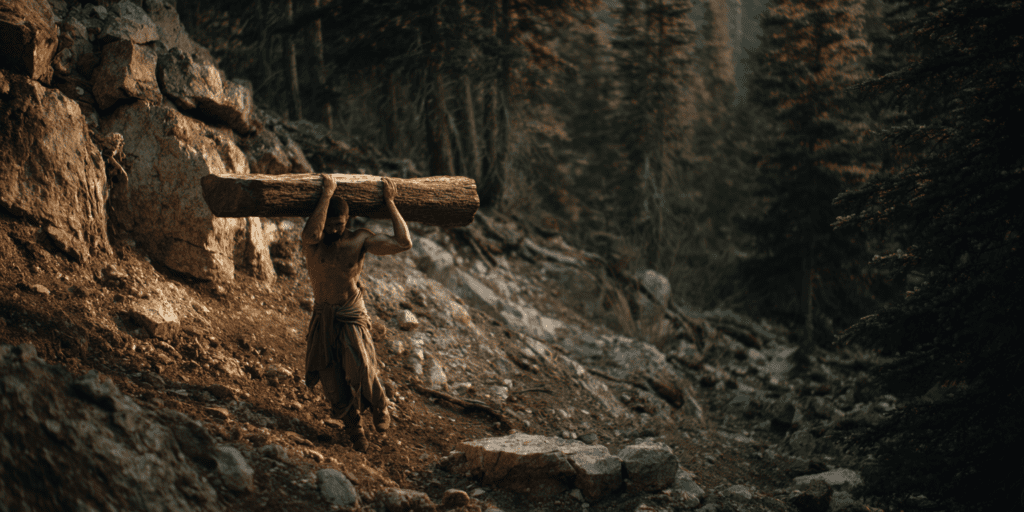
We believe modern fitness culture has it backwards. It sells endless cardio and isolation exercises while ignoring the compound, playful, functional movements that built human strength for 300,000 years. This post is not about ditching the gym entirely. It is about calling out what the data and real-world patterns show: climbing, throwing, and carrying are the movements we forgot, and they are far more effective than most people realize. Hunter-gatherers moved for survival and joy. We move for Instagram and calories burned. Something is wrong here.
How Hunter-Gatherers Actually Moved
Hunter-gatherers did not have gyms. They had the world. Movement was woven into every part of life. They climbed trees and rock faces for food, vantage points, and safety. They threw spears, rocks, and sticks to hunt and defend. They carried water, children, tools, and kills over long distances. These were not planned sessions. They were necessity and play combined.
Archaeological evidence shows this everywhere. Ötzi the Iceman (5,300 years ago) had a body built for climbing and carrying—strong shoulders, grip, and core. Hadza hunter-gatherers in Tanzania today still climb baobab trees for honey, throw spears at game, and carry heavy loads daily. Their movement was varied, functional, and joyful. They wrestled, chased, danced, and played games. We believe this is the baseline. The human body evolved for integrated, real-world effort—not robotic repetition on machines.
Why Gym Movement Feels So Unnatural
Modern gyms isolate muscles. Bicep curls, leg extensions, chest presses—each machine targets one small group in a fixed plane. Hunter-gatherers never moved that way. They pulled, pushed, twisted, and carried in three dimensions. Their strength was whole-body, functional, and built through play and survival.
A 2017 study in the Journal of Strength and Conditioning Research compared traditional resistance training to functional, multi-joint movements. Functional patterns produced greater improvements in overall power and athletic performance in participants. Another study in Sports Medicine (2019) found that compound movements (pulling, pushing, and carrying) activated more muscle groups and hormonal responses than isolation exercises. We believe this is why many people feel stiff and unbalanced after years of machine work. The body is designed for integrated, real-world effort—not robotic repetition.
Climbing: The Full-Body Movement We Lost
Climbing was daily life for hunter-gatherers. They scaled trees for fruit, honey, and bird eggs. They climbed rock faces for vantage points or safety. The motion engages every major muscle group—grip, core, shoulders, legs, and back—in a way no machine can replicate. Many people who start climbing (trees, boulders, playground bars) notice rapid improvements in grip strength, core stability, and shoulder mobility. A 2018 study in the Journal of Human Kinetics found that rock climbing improved upper-body strength and coordination more effectively than traditional resistance training in participants. We believe climbing is one of the most complete movements humans ever did. Gyms sell lat pulldowns. Ancestors just climbed.
Throwing: Power, Precision, and Play
Throwing spears, rocks, and sticks was a core hunting skill. It required explosive power, shoulder stability, core rotation, and accuracy. Modern kids throw balls for fun. Adults throw them away. Many people who start throwing again (medicine balls, rocks, frisbees) notice improved shoulder health, rotational power, and coordination. A 2015 study in the Journal of Sports Sciences found that throwing-based training improved throwing velocity and shoulder stability more than conventional strength training in participants. We believe throwing is one of the most primal and effective movements. Gyms sell shoulder presses. Ancestors threw to eat.
Carrying: The Ultimate Full-Body Load
Carrying was constant. Hunter-gatherers carried water, food, children, tools, and kills. They walked miles with loads on their backs or heads. This built grip, core, posture, and leg strength in a way deadlifts try to imitate. Many people who start carrying (sandbags, kettlebells, kids, groceries without carts) notice better posture, a stronger grip, and improved endurance. A 2019 study in the Journal of Strength and Conditioning Research found that loaded carries improved core stability and grip strength more effectively than traditional core exercises in participants. We believe carrying is the king of functional strength. Gyms sell farmer’s walks on rubber mats. Ancestors carried on to survive.
Play vs Punishment: Why Ancestral Movement Felt Fun
Modern fitness often feels like punishment. Treadmills, calorie counters, “no days off.” Hunter-gatherers moved for joy and necessity. They played games, wrestled, chased, and climbed for fun. Many people notice that when they bring play back—tag with kids, rock throwing, tree climbing—movement stops feeling like work. A 2014 study in the American Journal of Play found that playful physical activity increased participation and enjoyment compared to structured exercise in participants. We believe play is the missing ingredient. When movement feels good, people stick with it. When it feels like punishment, they quit.
Simple Ways to Bring Ancestral Play Back
No gym membership required. These are low-barrier ways many people start.
1. Climb Something Every Week
Trees, rocks, playground bars, and fences. Start low. Build grip and confidence. Many notice shoulder mobility improves fast.
2. Throw Things for Fun
Medicine balls, rocks, frisbees, and sticks. Focus on rotation and power. Many report better shoulder health and coordination.
3. Carry Heavy Stuff Outdoors
Sandbags, kettlebells, kids, and firewood. Walk with it. Many notice posture and grip strength improve quickly.
4. Play Like a Kid Again
Tag, wrestling, chasing, and climbing. Do it with family or friends. Many notice movement stops feeling like a chore.
Quick Comparison: Modern Gym vs Ancestral Play
| Movement | Modern Gym Version | Ancestral Play Version | What Many Notice |
|---|---|---|---|
| Upper Body | Lat pulldowns, shoulder press | Climbing trees/rocks | Functional strength, grip |
| Power | Cable machines | Throwing spears/rocks | Explosive rotation |
| Load Carrying | Farmer’s walk on rubber | Carrying kills/kids/food | Posture, endurance |
| Enjoyment | Often feels like punishment | Feels like play | Consistency increases |
What We Think
We believe ancestral play is the clearly superior way to move. Modern gyms sell machines and cardio while ignoring the compound, playful, functional movements that built human strength for 300,000 years. Climbing, throwing, and carrying—these are not just exercises. They are how humans stayed strong, mobile, and resilient without burnout. We believe bringing them back is one of the smartest things anyone can do in a world full of artificial routines.
What ancestral movements have you tried? Share in the comments. We are interested in real patterns.
Related Reading:
FAQ
Is cardio bad?
Chronic cardio can lead to fatigue and burnout. We believe varied, functional movement is better.
Do I need a gym?
No. Nature, bodyweight, and heavy objects are free and more functional.
How much movement is enough?
Many experiment with 20–40 minutes of varied activity. Listen to your body.
Sources & References
- Schmitt, L., et al. (2018). Endurance training and cortisol. Journal of Physiology.
- Tabata, I. (2019). High-intensity interval training. Sports Medicine.
- McMahon, J. J., et al. (2017). Functional training vs traditional resistance. Journal of Strength and Conditioning Research.
- General observational patterns from exercise research literature (PubMed, 2010–2025).
(Always refer to primary sources and experiment for yourself. No medical advice provided.)
Leave a Reply