Last Updated: February 2026
I used to cook with nonstick pans. Everyone does. My mom got me a set when I moved out, and I thought I was doing everything right. I was eating clean, cooking at home, and avoiding processed food. But I was already eating healthy and clean, and I didn’t think that my pan could be just as toxic as the food I was trying to avoid.
That’s the problem. You can have the best diet in the world, but if you’re cooking it in toxic cookware, you’re sabotaging yourself.
The Problem with Nonstick
Nonstick pans are coated with chemicals called PFAS. You know them as Teflon or PFOA. They call them “forever chemicals” because they don’t break down. Not in your body, not in the environment. Ever.
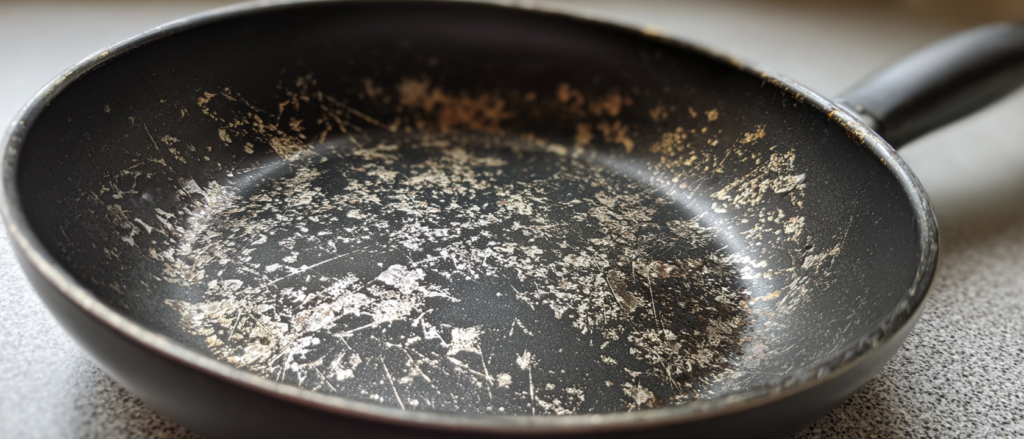
Here’s what happens: when you heat a nonstick pan, those chemicals break down and release fumes. You breathe them in. Microscopic particles flake off into your food. You eat them. They get into your bloodstream and accumulate in your organs. Your liver, your kidneys, your thyroid.
And they stay there.
97% of Americans have these chemicals in their blood right now. The CDC confirmed it. They’re linked to hormone disruption, thyroid problems, fertility issues, liver damage, and cancer.
But we keep using them because cleanup is easier.
Health is an investment. If you care about what you eat, you should care about what you cook it in. If you wouldn’t settle for bad food, why would you settle for a toxic pan?
What I Learned About “PFOA-Free” Labels
After the lawsuits, companies got smart. They started labeling pans “PFOA-free” and marketing them as safe. Technically true. But instead of PFOA, they’re using GenX, PFBS, or other similar chemicals. Same problem, different name.
Research shows these replacements cause the same damage—liver problems, hormone disruption, immune issues. The only difference is there’s less data on them yet, so companies can claim they’re “safer.”
That’s not safety. That’s a loophole.
If a pan is nonstick and has a coating, assume it’s not safe.
What Actually Works
For hundreds of thousands of years, humans cooked with materials from the earth. Cast iron, steel, clay, stone. No coatings. No chemicals. Your great-grandmother used cast iron for everything. It lasted her entire life, and she passed it down. It got better with age.
The shift to nonstick wasn’t about health. It was about convenience and profit. Companies wanted to sell pans that wore out every few years so you’d buy more.
Here’s what you should use instead.
1. Cast Iron (What I Use Every Day)
Cast iron is pure iron. No coatings, no toxins. When you season it properly—coating it with fat and heating it—it develops a natural nonstick surface. It gets better every time you use it.
And instead of toxic chemicals, it actually adds beneficial iron to your diet.
What to Buy:
- Lodge Cast Iron Skillet—American-made, pre-seasoned, and affordable. This is the workhorse. $20-50 on Amazon →
- Stargazer Cast Iron—smoother finish, lighter. Premium option. $155-195 on Amazon →
How to Season It:
- Wash with hot water (no soap on seasoned pans)
- Dry it completely on the stove
- Coat with a thin layer of fat (tallow, lard, avocado oil)
- Heat until it smokes
- Let it cool
- Repeat 3-5 times for a new pan
Why It Works:
- Lasts forever
- Gets better with age
- Adds iron to your food
- Handles high heat
- Works anywhere (stove, oven, fire)
The Trade-Off:
- Requires seasoning
- Heavy
- Not dishwasher safe
- Takes a little effort
If you use cast iron and build up the seasoning with a little extra effort, you get the same nonstick effect. Instead of toxins, you get beneficial iron in your diet.
Once you get a cast iron pan, you won’t need another skillet again.
Best For: Everything. Eggs, meat, vegetables, one-pan meals.
2. Stainless Steel (The Professional Option)
Stainless steel is non-reactive and doesn’t leach chemicals. Professional kitchens use it because it’s durable and safe.
What to Buy:
- All-Clad D3 – The gold standard. Used in restaurants. $100-300 on Amazon →
- Cuisinart MultiClad Pro – Budget-friendly, similar quality. $40-80 on Amazon →
How to Use It:
- Preheat the pan 2-3 minutes
- Add fat and heat until shimmering
- Add food and let it sear—don’t move it
- If it sticks, it’s not ready to flip
Why It Works:
- Works with any food
- Dishwasher safe
- Oven safe
- Lasts decades
The Trade-Off:
- Not naturally nonstick (requires technique)
- More expensive
- Shows stains
Best For: Searing, sautéing, pan sauces.
3. Carbon Steel (Cast Iron’s Lighter Cousin)
Carbon steel is 99% iron, 1% carbon. Thinner and lighter than cast iron, but develops the same nonstick patina.
What to Buy:
- Matfer Bourgeat Carbon Steel – French-made, professional-grade. $80-180 on Amazon →
- Lodge Carbon Steel – American-made, pre-seasoned. $30-50 on Amazon →
Why It Works:
- Lighter than cast iron
- Heats faster
- Develops nonstick surface
- Cheaper than high-end stainless
The Trade-Off:
- Requires seasoning
- Can rust if not maintained
Best For: Stir-fries, high-heat cooking, steaks.
4. Enameled Cast Iron (For Acidic Foods)
Regular cast iron is coated with porcelain enamel. Makes it non-reactive, so you can cook tomatoes, wine sauces, and other acidic foods without the metal leaching.
What to Buy:
- Le Creuset Dutch Oven – The original. Expensive but lasts forever. $150-250 on Amazon →
- Lodge Enameled Cast Iron – Affordable alternative. $60-120 on Amazon →
Why It Works:
- Non-reactive
- No seasoning needed
- Retains heat
- Beautiful
The Trade-Off:
- Expensive
- Heavy
- Enamel can chip
Best For: Stews, soups, braising, anything with tomatoes or wine.
5. 100% Ceramic (True Ceramic, Not Coated)
True ceramic cookware is made from clay and fired at high temps. Completely inert, no metals, no coatings.
What to Buy:
- Xtrema Ceramic Cookware – 100% ceramic, lead-free certified.
Why It Works:
- Completely non-toxic
- Non-reactive
- Oven safe
The Trade-Off:
- Can crack if dropped
- Not for high-heat stovetop
- Heavy
- Expensive
Best For: Baking, casseroles, serving dishes.
What About “Ceramic Nonstick” Pans?
These aren’t true ceramic. They’re aluminum or steel with a ceramic coating. The coating breaks down over time, usually within 6-12 months. Food starts sticking, and you’re replacing the pan again.
Stick with cast iron, stainless steel, carbon steel, enameled cast iron, or 100% ceramic. These have been used safely for centuries.
How to Transition (The Simple Plan)
You don’t have to replace everything at once. Start with what you use most.
Week 1-2: Get one cast iron skillet or stainless steel pan. Use it for everything. Get comfortable.
Week 3-4: Add a saucepan (stainless steel).
Month 2: Add specialty pieces if needed (Dutch oven, carbon steel).
Month 3: Throw out the nonstick.
The Real Cost
Nonstick Pan:
- $20-40
- Lasts 1-2 years
- You’ll spend $200-400 over 20 years
- Plus unknown health costs
Cast Iron Skillet:
- $30-60
- Lasts forever
- $0 replacement cost
- Actually adds beneficial iron
Stainless Steel Set:
- $300-600
- Lasts 30-50 years
- $0 replacement cost
- No health risks
Health is an investment. Non-toxic cookware is cheaper in the long run.
What I Actually Use
People ask me this all the time, so here’s what’s in my kitchen right now:
Daily:
- 12″ Lodge Cast Iron (eggs, steak, everything)
- 10″ Lodge Cast Iron (smaller meals)
- 12″ Matfer Carbon Steel (stir-fries, high-heat)
- 10″ All-Clad Stainless (pan sauces, fish)
Specialty:
- 5.5qt Lodge Enameled Dutch Oven (stews, braising)
- 3qt All-Clad Saucepan (boiling, sauces)
Total: Around $400 over 3 years. I’ll never replace any of it.
Common Questions
Can I use metal utensils on cast iron? Yes, but wood or silicone is gentler on the seasoning.
How do I clean cast iron? Hot water and a stiff brush. Dry immediately on the stove. Apply a thin layer of fat.
Can I cook acidic foods in cast iron? Not for long periods. Use enameled cast iron or stainless steel for tomatoes, vinegar, wine.
What about aluminum? Pure aluminum can leach. I prefer cast iron or stainless steel.
Can cast iron go in the dishwasher? Technically yes. Don’t do it. It strips the seasoning.
Here’s the Thing
If you’re someone who cares about your health, you should care about all aspects. If you want to dress nice, you don’t put on your favorite jacket and pants with an ugly pair of shoes. It’s a holistic approach.
If you’re eating whole animal-based foods and cooking with healthy fats, why would you settle for a toxic pan when health is the most investment you can make?
Throw away your nonstick pans. Get something that’s not leaching chemicals into the air and into your food when you heat it up or scratch it.
Convenience is the enemy of health.
Start with one good pan. Use it for a month. You won’t go back.
Want the Complete Framework?
This is just one piece. If you want the full system for aligning your life with your biology—nutrition, movement, sleep, stress, community, purpose—check out The Ancestral Blueprint.
Seven pillars. Real science. Real results.
Some links are Amazon affiliate links. If you buy through them, I earn a small commission at no cost to you. I only recommend what I actually use.