
The Common Belief We All Inherited

For decades, cholesterol has been framed as a dietary villain. We were told it clogs arteries, raises heart risk, and should be avoided whenever possible. Eggs were restricted, butter was replaced with vegetable oils, and “cholesterol-free” became a selling point rather than a warning sign.
That narrative became so normalized that many people still assume cholesterol is inherently harmful, even though the science has steadily become more nuanced. The result is confusion. People hear conflicting headlines, follow rigid rules, and still feel unsure about what cholesterol actually does in the human body.
To understand where the myths came from, we need to step back and look at cholesterol through biology and evolution rather than marketing and fear.
What Cholesterol Actually Is and Why the Body Makes It
Cholesterol is not a toxin or a waste product. It is a structural molecule essential to human life.
Every cell membrane in the body relies on cholesterol for stability and flexibility. Without it, cells would be fragile and dysfunctional. Cholesterol is also the raw material used to produce steroid hormones such as testosterone, estrogen, progesterone, and cortisol. It plays a central role in bile acid production, which allows us to digest and absorb fats and fat-soluble vitamins like A, D, E, and K.
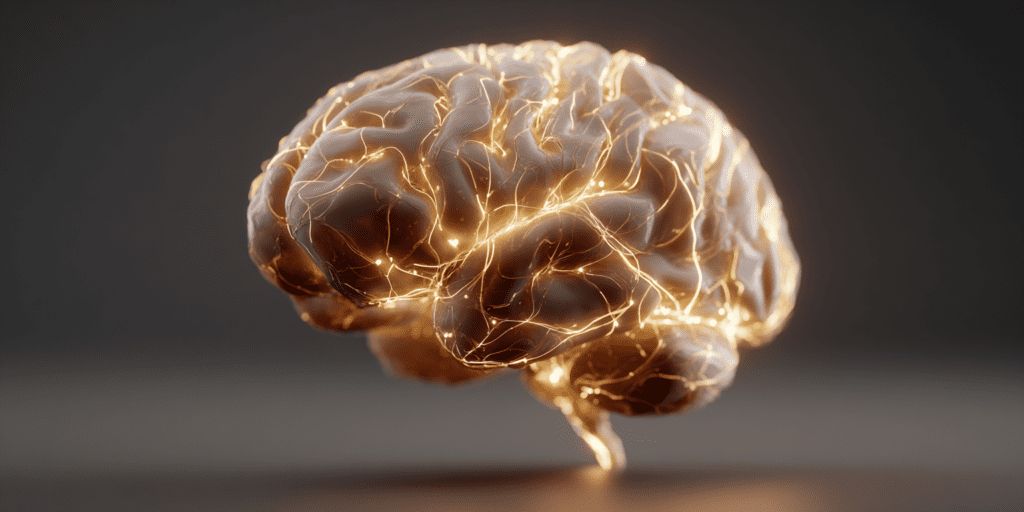
Perhaps most importantly, the brain is extremely cholesterol-dense. Roughly a quarter of the body’s total cholesterol is found in the brain, where it supports neuron structure, synapse formation, and signaling.
Because cholesterol is so essential, the body produces most of what it needs internally, primarily in the liver. Dietary cholesterol does not simply add on top of what the body makes. Instead, the body adjusts its own production based on intake, demand, and metabolic context.
This is a tightly regulated system, not a fragile one.
How Cholesterol Got Its Bad Reputation
The fear around cholesterol largely traces back to mid-20th-century hypotheses linking saturated fat, cholesterol, and heart disease. Early observational studies noticed correlations between cholesterol levels and cardiovascular events, but correlation was often treated as causation.
At the same time, industrial food production was accelerating. Seed oils, refined carbohydrates, and ultra-processed foods entered the diet rapidly. Instead of examining how these new foods altered metabolism and inflammation, cholesterol became the primary scapegoat.
Over time, cholesterol was simplified into a single number. Higher was bad. Lower was good. Context was removed.
What was missed was that cholesterol levels can rise or fall for many reasons, including inflammation, insulin resistance, stress, infection, thyroid function, and caloric intake. Cholesterol itself was not driving disease in isolation.
What Changed in the Modern Environment
From an evolutionary perspective, humans have consumed cholesterol-rich foods for as long as we have existed. Meat, organs, eggs, and seafood were staples, not exceptions. There was no historical avoidance of cholesterol, nor evidence of widespread cardiovascular disease in traditional populations eating whole, minimally processed diets.
What did change dramatically was the modern environment.
Highly refined carbohydrates increased blood sugar variability and insulin demand. Industrial seed oils introduced unstable polyunsaturated fats prone to oxidation. Chronic stress, sleep disruption, sedentary behavior, and environmental chemical exposures became normal.
These factors alter lipid metabolism, promote inflammation, and change how cholesterol particles behave in the bloodstream. The problem was no longer cholesterol itself, but the metabolic environment surrounding it.
What the Research Actually Shows
Modern research paints a far more complex picture than the old “cholesterol is bad” model.
Dietary cholesterol has been shown to have a relatively small effect on blood cholesterol for most people. In many cases, increased intake leads to compensatory reductions in endogenous production.
Cholesterol transport matters more than total cholesterol. LDL particles vary in size and behavior, and their impact is influenced by oxidative stress and inflammation. HDL plays roles in cholesterol transport, immune modulation, and cellular repair, not simply “good cholesterol.”
Low cholesterol levels are not inherently protective either. Observational studies have associated very low cholesterol with increased risk of certain neurological issues, hormone disruptions, and overall mortality in some populations.
People such as Paul Saladino suggest that cholesterol should be viewed as a marker of underlying metabolic health rather than a primary driver of disease on its own. While not all researchers agree on every point, there is broad consensus that cholesterol biology cannot be reduced to a single number or dietary villain.

Practical Insights Without Prescriptions
Rather than focusing on eliminating cholesterol, it may be more useful to focus on the conditions that influence how cholesterol functions in the body.
Whole, minimally processed foods reduce oxidative stress and support metabolic regulation. Adequate protein, stable energy intake, and sufficient micronutrients help the body use cholesterol appropriately. Supporting sleep, movement, and stress regulation influences lipid metabolism more than dietary cholesterol avoidance ever did.
This is not about chasing perfect lab values or ignoring medical guidance. It is about understanding that cholesterol is part of a larger system, not an enemy acting alone.
A More Grounded Way to Think About Cholesterol
Cholesterol is not a mistake of human biology. It is a core component of it.
The fear surrounding cholesterol arose from oversimplified models applied to a rapidly changing food environment. As research evolves, the narrative continues to shift away from blame and toward context.
When we view cholesterol through evolutionary design and biological function, it becomes clear that the real question is not how low we can push it, but how well the body is functioning as a whole.
Awareness, not fear, is what allows better decisions.
Sources
- Ravnskov U. Cholesterol Myths. New Trends Publishing.
- Fernandez ML, Webb D. The LDL to HDL cholesterol ratio as a valuable tool to evaluate coronary heart disease risk. Journal of the American College of Nutrition.
- Goldstein JL, Brown MS. A century of cholesterol and coronaries. Journal of Clinical Investigation.
- Volk MG, et al. Cholesterol metabolism and brain function. Nature Reviews Neuroscience.
- Dietary Guidelines Advisory Committee Report, 2015.
Leave a Reply