
(And Why Your Grandfather’s Lard Was Never the Problem)
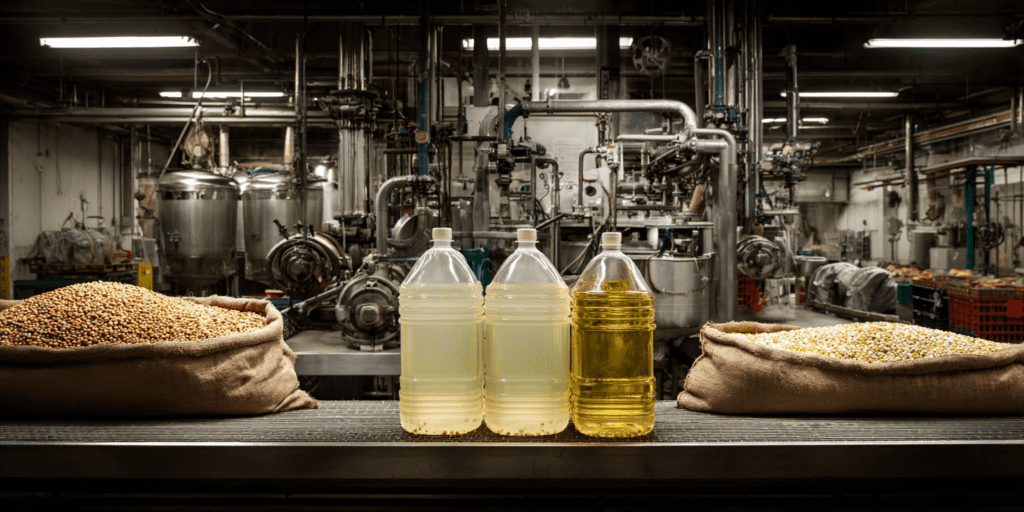
Your ancestors cooked with animal fats—tallow, lard, butter, ghee. They never cracked open a bottle of canola oil. That’s because canola, soybean, and corn oil didn’t exist as food.
The “heart-healthy” vegetable oil narrative? Pure 20th-century marketing. Industrial byproducts rebranded as wellness foods. Let’s break down why the oils lining grocery store shelves today would confuse anyone from 1899.
What Your Ancestors Actually Cooked With
For 200,000 years of human evolution, cooking fat came from one place: animals.
Hunter-gatherers rendered fat from game. Early farmers churned butter and clarified ghee. Mediterranean cultures used olive oil pressed from whole olives. Fat was simple—render it, melt it, eat it. No chemical extraction. No hexane solvents. No 12-step deodorizing process.
Archaeological evidence shows animal fat residues in pottery from over 10,000 years ago. Ancient texts from India, Greece, and the Middle East describe butter and tallow as nourishing staples. For the entirety of human existence until your great-grandfather’s generation, cooking fat was recognizable food.
Seed oils? Not even on the menu.
The Birth of Industrial Seed Oils (Spoiler: It’s Gross)
Seed oils are not ancient wisdom. They’re repackaged industrial waste.
Here’s the timeline:
- 1870s-1880s: Cottonseed oil emerges as a byproduct of cotton production. Originally used for lamp fuel and industrial lubricants.
- 1911: Procter & Gamble figures out how to hydrogenate cottonseed oil and sells it as Crisco—the first mass-market cooking shortening.
- 1930s-1940s: Soybean oil production explodes as a cheap alternative to animal fats during wartime rationing.
- 1970s: Canola oil (from rapeseed) gets FDA approval after heavy lobbying.
These were never traditional foods. They were profitable solutions to industrial problems.
How Seed Oils Are Made (And Why It Should Concern You)
The process to turn seeds into “cooking oil” involves:
- Crushing and heating seeds at high temperatures
- Chemical extraction using hexane (a petroleum-derived solvent)
- Degumming to remove impurities
- Bleaching to remove color
- Deodorizing at extreme heat to remove the rancid smell
The result? A shelf-stable, flavorless oil that can sit in a plastic bottle for years without going bad. If bacteria won’t eat it, why should you?
When you heat these oils in your kitchen, many people notice a chemical smell—that’s oxidation happening in real time. Animal fats? They smell like food.
The “Heart-Healthy” Lie: How Saturated Fat Got Scapegoated
In the 1950s–70s, saturated fat became public enemy #1. Not because the science was solid—because the marketing was.
Ancel Keys’ Seven Countries Study cherry-picked data linking animal fat to heart disease while ignoring contradictory evidence from countries with high saturated fat intake and low heart disease rates (hello, France). The American Heart Association jumped on board. Seed oil manufacturers saw an opportunity.
Suddenly:
- Butter was “dangerous”
- Margarine was “smart”
- Lard was “artery-clogging”
- Crisco was “modern”
The problem? The science was never as clear as the headlines suggested.
- A 2014 BMJ review of the original data found that replacing saturated fat with omega-6 seed oils did not reduce heart disease risk.
- A 2010 Cochrane review concluded there was no clear cardiovascular benefit to replacing animal fats with polyunsaturated seed oils.
- Meanwhile, heart disease, obesity, and metabolic disorders skyrocketed during the same period seed oils became dietary staples.
Correlation isn’t causation—but the timeline is suspicious as hell.
Your grandfather ate lard, butter, and tallow. He didn’t have the obesity and metabolic disease rates we see today. Something changed. It wasn’t the animal fats.
Why Animal Fats Handle Heat Better (Science You Can Smell)
Not all fats are created equal—especially under heat.
Animal fats are primarily saturated and monounsaturated fatty acids. These are chemically stable. They resist oxidation when you crank up the heat.
Seed oils are loaded with polyunsaturated fatty acids (PUFAs)—particularly omega-6. These are fragile. When heated, they break down into oxidized compounds that smell rancid and taste off.
A 2015 Food Chemistry study tested frying stability across different fats. Beef tallow and lard showed significantly lower oxidation rates than soybean or corn oil. Translation: they hold up better at high heat and don’t turn into chemical sludge.
Smoke Point Isn’t the Full Story

Lactose-free ghee made from milk sourced from grass-fed, pasture-raised cows, primarily from New Zealand. Rich, buttery, and lightly nutty, it works as a 1-to-1 replacement for butter or cooking oils in baking, sautéing, and everyday cooking. Shelf-stable, free from seed oils, and suitable for Paleo, Keto, Whole30, and gluten-free lifestyles.
Sure, many seed oils have decent smoke points on paper. But oxidative stability matters more than when smoke appears.
Think about it: Tallow doesn’t just have a high smoke point (400–420°F)—it stays structurally intact at that temperature. Soybean oil might not smoke until 450°F, but the polyunsaturated fats inside are already breaking down and oxidizing before you see visible smoke.
What you smell in the pan tells the truth. Animal fats smell like food. Seed oils smell like a chemistry experiment.
How to Ditch Seed Oils Without Overthinking It
You don’t need to throw out every bottle in your pantry tonight (though you could). Here’s the simple switchback:
Your New Cooking Fat Lineup:
For High-Heat Cooking (Searing, Frying, Roasting):

Rendered animal fats made for high-heat cooking with a stable, traditional profile trusted for generations. Chef-preferred and animal-based, these fats support whole-animal use and are suitable for baking, roasting vegetables, and replacing butter.
- Beef tallow
- Pork lard
- Duck fat (if you’re feeling fancy)
For Medium-Heat Cooking (Sautéing, Baking):
- Butter
- Ghee (clarified butter—great for higher temps)
For Cold Use or Low Heat (Dressings, Drizzling):
- Extra virgin olive oil (from whole olives, not industrial processing)
- Coconut oil (if you like the flavor)
Where to Get Them:
- Render your own from grass-fed beef suet or pork fat (cheapest option, max control)
- Buy from trusted brands like Fatworks, Epic, or 4th & Heart
- Ask your local butcher for fat trimmings (often free or dirt cheap)

Chef-grade Spanish Ibérico lard made from 100% acorn-fed Ibérico pigs, slowly rendered in small batches for a clean, buttery flavor and smooth texture. Naturally high smoke point makes it suitable for frying, roasting, and baking, producing crisp results without additives or preservatives. Fatworks stands behind the product with quality and delivery support.
The Bottom Line
Seed oils are a 20th-century industrial experiment marketed as health food. Your DNA doesn’t recognize them. Your ancestors never ate them. The “heart-healthy” label is marketing, not science.
Animal fats have been fueling human performance for 200,000 years. They’re stable at heat. They taste better. They don’t require chemical solvents to extract.
The switch back isn’t radical—it’s ancestral.
Your body knows what to do with butter, tallow, and lard. It has no evolutionary blueprint for hexane-extracted, bleached, deodorized soybean oil.
Cook like your great-grandfather. Your taste buds, your hormones, and your mitochondria will thank you.

Lodge cast iron cookware is made without PFOA or PTFE, using only iron and oil for a naturally seasoned, chemical-free cooking surface. Pre-seasoned with natural oil, it offers reliable nonstick performance that improves with use and delivers excellent heat retention for searing, baking, frying, and more. Family-owned and made in the USA, it’s built for long-lasting, everyday cooking.
What Changes Would You Notice?
When people ditch seed oils and cook with animal fats, they report:
- Food tastes richer and more satisfying
- Less bloating and digestive discomfort
- Cleaner-burning energy (no blood sugar crashes)
- Better satiety (you stay full longer)
- Cooking smells better (no chemical odor)
Try it for 30 days. Pay attention to how you feel. Your body will tell you the truth.
Have you made the switch? Drop a comment below—I want to hear what you’ve noticed.
FAQ
Q: Are seed oils really that bad?
They’re unstable, heavily processed, and didn’t exist as food until recently. Your body wasn’t designed to run on industrial oils. Animal fats are the evolutionary baseline.
Q: What’s the best fat for high-heat cooking?
Beef tallow or lard. Both are stable, flavorful, and perform better than seed oils under heat.
Q: Can I just use olive oil instead?
Olive oil is great for low-medium heat and cold use. For searing, frying, or roasting above 375°F, tallow or lard are superior.
Q: Isn’t saturated fat bad for my heart?
That claim was based on cherry-picked 1950s data that’s been debunked by modern reviews. Your grandfather ate saturated fat his whole life. The real epidemic started when we replaced it with seed oils.
Sources & References
- Warner, K. (2015). Oxidative stability of beef tallow vs vegetable oils. Journal of Food Science and Technology.
- Guillen, M. D., & Ruiz, A. (2020). Oxidation of cooking fats. Food Chemistry.
- Simopoulos, A. P. (2002). The importance of the ratio of omega-6/omega-3 essential fatty acids. Biomedicine & Pharmacotherapy.
- Ramsden, C. E., et al. (2013). Re-evaluation of traditional diet-heart hypothesis. BMJ.
Ready to stop guessing and start eating like your body was designed to?
Download my FREE 7-Day Animal-Based Reset and cut the nutritional BS from your life.
Leave a Reply